The Hidden Cost of Running Your Business on Too Many Apps
Running your business across multiple disconnected apps may be costing you more than you realise. Discover how scattered tools increase expenses, waste valuable time and slow business growth — and how a more connected business platform can help.
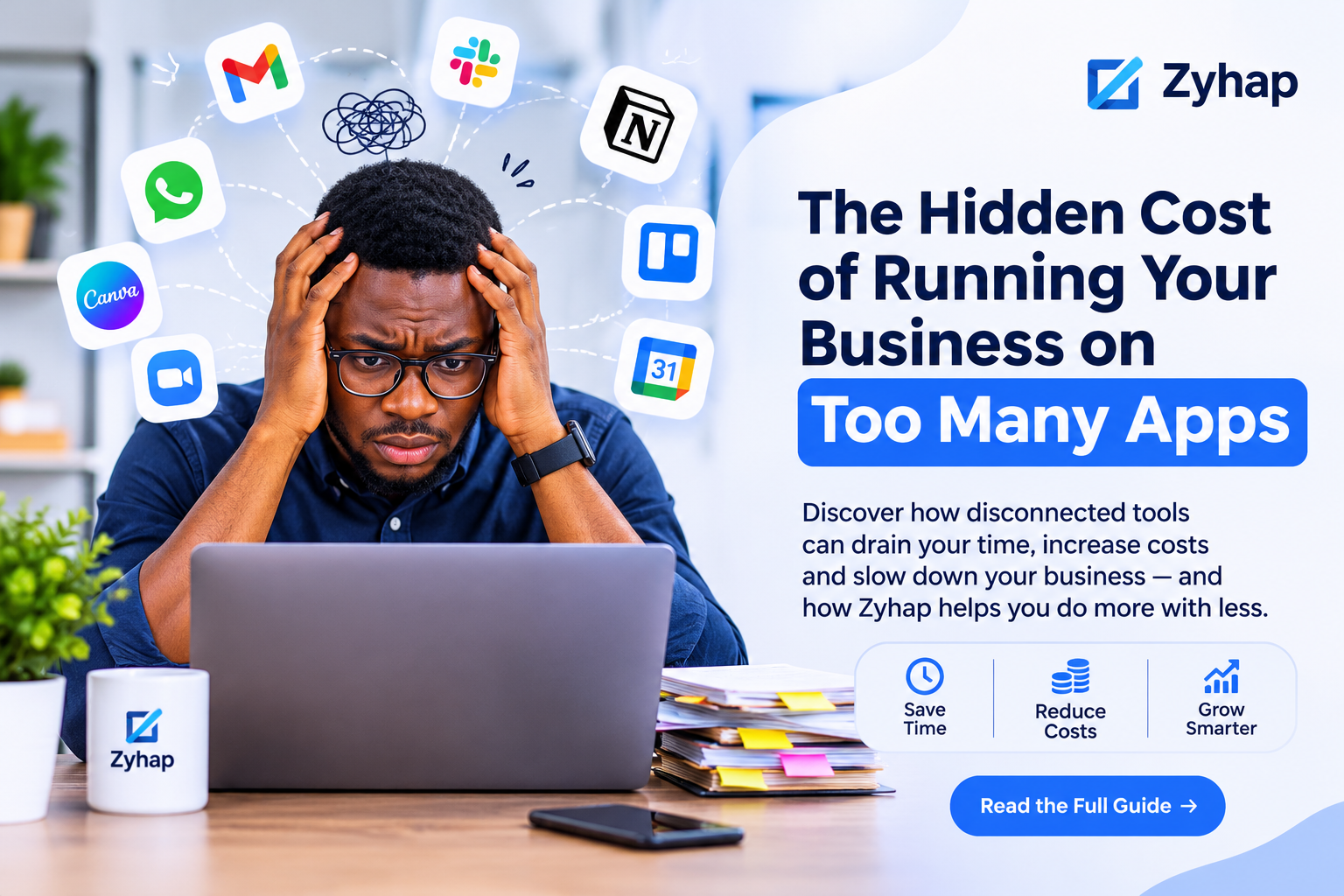
Running a business today often means using multiple applications to get everyday tasks done. One app handles communication, another manages employees, another tracks finances, and yet another helps with sales, marketing or customer relationships.
At first, this arrangement might seem perfectly reasonable. After all, every application promises to make a particular part of your business easier.
But as your business grows, something interesting happens: the tools you adopted to simplify your operations can gradually become the reason your operations feel complicated.
You spend more time switching between applications, searching for information, managing subscriptions and trying to keep different teams on the same page.
The real cost of running a business on too many apps isn't always obvious. Sometimes, it's the time you lose. Sometimes, it's the opportunities you miss. And sometimes, it's the unnecessary complexity that prevents your business from growing efficiently.
Let's explore why this happens and what businesses can do differently.
1. The Subscription Costs Add Up Quickly
One of the most obvious disadvantages of using multiple applications is the cumulative subscription cost.
Consider a growing business that pays separately for:
Project management software.
Customer relationship management (CRM).
HR and employee management tools.
Accounting and financial management software.
Social media management platforms.
Communication and collaboration tools.
Document management and electronic signatures.
Each subscription might appear affordable on its own. However, when you combine them, the monthly expense can become significant.
There may also be additional charges for extra users, premium features, storage and integrations.
The problem isn't necessarily that these applications are expensive. It's that businesses can end up paying for overlapping functionality across several different platforms.
The smarter approach: Regularly review your software subscriptions. Identify overlapping tools and consider whether a more connected business platform could reduce the number of separate systems you need.
2. Your Employees Spend Too Much Time Switching Between Apps
Time is one of the most valuable resources in any business.
Imagine an employee who needs to check a customer record, confirm a payment, update a project and send a document for approval.
If each activity requires a different application, the employee must repeatedly switch between systems.
These small interruptions can accumulate throughout the working day.
Employees may also need to remember multiple passwords, learn different interfaces and navigate different notification systems.
Instead of focusing entirely on their responsibilities, they spend valuable time navigating the technology that is supposed to help them work.
This creates unnecessary friction, particularly for businesses with multiple departments.
The smarter approach: Give employees access to connected tools through a more organised digital workspace. Make it easier to access relevant business information without constantly jumping between unrelated applications.
3. Important Business Information Becomes Scattered
When different departments use different applications, business information can become fragmented.
Your sales team might maintain customer information in one system, while your finance team tracks payments elsewhere.
Your HR team may have employee records in another application, while project updates are stored somewhere completely different.
This creates several challenges:
Employees may struggle to find the latest information.
Different departments may work with inconsistent records.
Managers may need to request information from several people.
Important updates can get lost between communication channels.
Business decisions may be based on incomplete information.
The bigger your organisation becomes, the more difficult it can be to maintain visibility across these separate systems.
A connected business environment makes it easier to organise information, establish appropriate access permissions and improve collaboration between departments.
4. Managing Multiple Apps Creates More Administrative Work
Every application requires some level of management.
Someone needs to create accounts, assign permissions, manage users, monitor subscriptions and ensure employees understand how to use the system.
When a business relies on too many applications, these responsibilities multiply.
Consider what happens when a new employee joins your organisation.
You may need to create accounts across several platforms, assign different permissions, provide training and ensure the employee can access the information required for their role.
When that employee leaves, those permissions must be reviewed and access removed appropriately.
These administrative responsibilities may seem small individually, but they become increasingly difficult as a business grows.
A more unified approach to business management can help simplify user administration and improve oversight.
5. Disconnected Systems Make Collaboration More Difficult
Businesses depend on collaboration.
Sales, marketing, finance, HR and operations all contribute to achieving the same organisational goals.
However, when these departments operate through completely separate applications, communication can become unnecessarily complicated.
For example, a sales team might close a deal, but the finance department may not immediately have the information it needs.
A project manager might update a deadline, but other employees may continue working with an outdated schedule.
A manager might approve a request through one platform while the relevant documentation remains stored somewhere else.
These situations create delays and make it harder for teams to work together effectively.
Connected workflows help businesses reduce these gaps by making relevant information and processes easier to coordinate.
6. Too Many Tools Can Create Security and Access Management Challenges
Every additional application introduces another account, another set of permissions and another place where business information may be stored.
This doesn't automatically mean that using multiple applications is unsafe. However, managing access across numerous disconnected platforms can become more complicated.
Businesses need to consider:
Who has access to sensitive information?
Are employees given only the permissions they need?
How quickly can access be revoked when someone leaves?
Are important business records properly protected?
Are third-party applications being reviewed regularly?
A well-organised technology environment should make security and access management part of everyday operations rather than an afterthought.
Businesses should prioritise platforms that support appropriate permissions, secure access controls and responsible information management.
7. Technology Should Help Your Business Grow, Not Slow It Down
The purpose of business software is to make work easier, improve visibility and help people achieve more.
But when your technology becomes fragmented, you can end up spending more time managing applications than managing your business.
This is particularly important for small and medium-sized businesses.
Growing organisations need systems that can support changing operational requirements without introducing unnecessary complexity every time the business expands.
Rather than continually adding another application to solve every new problem, businesses should think more strategically about how their technology works together.
What Is the Alternative? A More Connected Business Platform
The solution isn't necessarily to eliminate every specialised application.
Some businesses will always need dedicated tools for particular activities. The important thing is to avoid creating unnecessary fragmentation.
A connected business platform brings important business functions into a more organised environment.
Depending on the platform and its available features, this could include:
Social media management: Plan, schedule and manage marketing activities.
Human resources: Organise employee information and HR processes.
Finance: Manage financial activities and records.
Sales and CRM: Organise customer relationships and sales processes.
Project management: Coordinate tasks, teams and deadlines.
Inventory management: Keep track of products and stock.
Booking management: Organise appointments and reservations.
Electronic signatures: Manage document signing digitally.
AI-powered workflows: Use AI to assist with everyday business activities.
The advantage is a more coordinated approach to managing business operations.
Instead of treating every department as an isolated system, businesses can work towards a more connected digital environment.
How Zyhap Helps Businesses Work Smarter
At Zyhap, we believe businesses should spend less time managing disconnected tools and more time focusing on meaningful work.
That's why we're building a connected business platform designed to bring important business activities into one organised digital environment.
From social media management to business operations, Zyhap aims to help organisations simplify the way they work.
With Zyhap, businesses can explore tools designed to support areas such as:
Social media management and content scheduling.
HR and employee management.
Finance and business administration.
Sales and customer relationships.
Project and task management.
Inventory and booking management.
Electronic document signing.
AI-powered business assistance.
Rather than constantly moving between disconnected applications, businesses can work towards a more streamlined way of managing their activities.
Whether you're a small business owner, an entrepreneur, a growing company or an agency managing multiple clients, having a more organised digital workspace can make a meaningful difference.
5 Questions to Ask Before Adding Another Business App
Before subscribing to another business application, ask yourself:
Do we really need another application? Could an existing platform already handle this task?
Does it integrate with our existing tools? Will information move easily between systems?
What is the total cost? Consider subscriptions, additional users, training and maintenance.
Will our employees actually use it? A complicated system can create more problems than it solves.
Will it support our future growth? Think beyond your immediate needs and consider where the business is heading.
These questions can help you make better technology decisions and avoid unnecessary software expenses.
Final Thoughts: Build a Business That Works Smarter
Using multiple business applications isn't automatically a problem. The problem begins when those applications create more complexity than value.
As your business grows, your technology should grow with it.
You need systems that help your teams collaborate, keep information organised, reduce repetitive work and make everyday business activities easier to manage.
Sometimes, the best technology decision isn't adding another application.
It's finding a smarter way to bring everything together.
Ready to simplify the way you run your business?
Explore Zyhap and discover a more connected approach to business management.
Zyhap — Run your business smarter.
Keep reading
You may also like
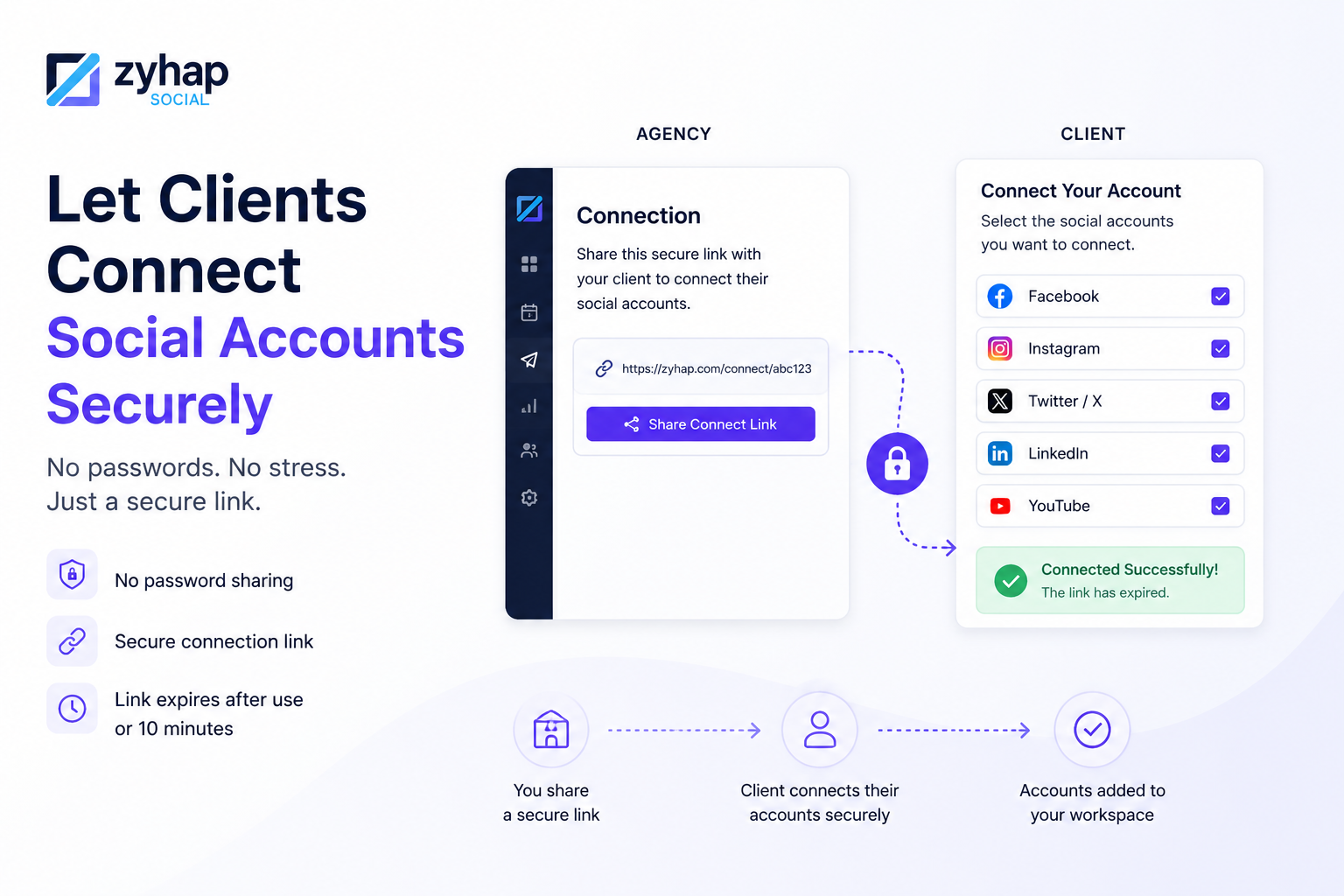
How Agencies Can Let Clients Connect Social Accounts Without Sharing Passwords
Agencies should not need client passwords just to manage social media accounts. Learn how secure social account connection links help clients connect their accounts safely while agencies manage everything from one workspace.
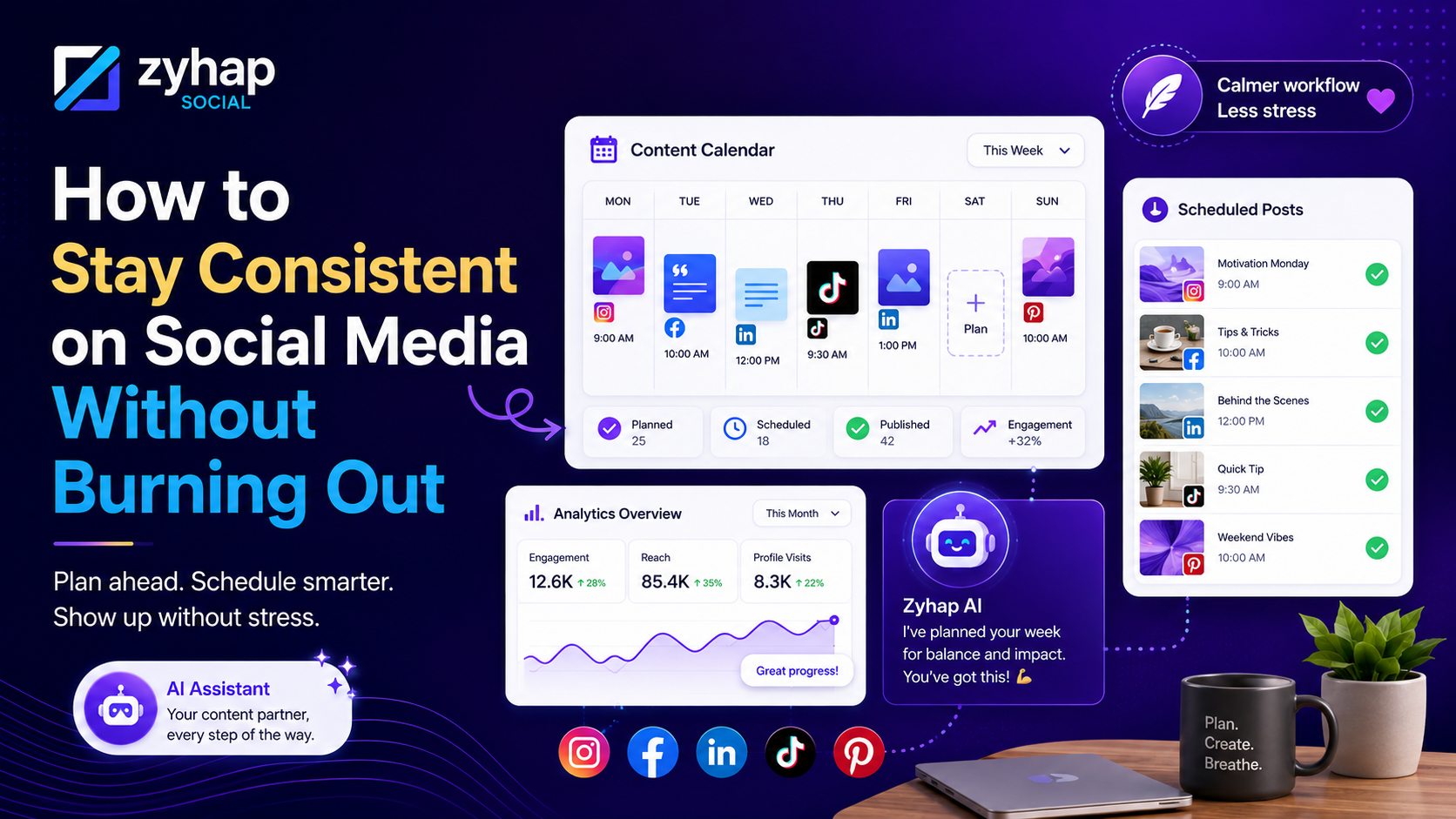
How to Stay Consistent on Social Media Without Burning Out
Staying consistent on social media does not mean posting every hour or forcing yourself to create content daily. Learn how to build a calmer content workflow that helps you show up regularly without stress, burnout, or last-minute pressure.
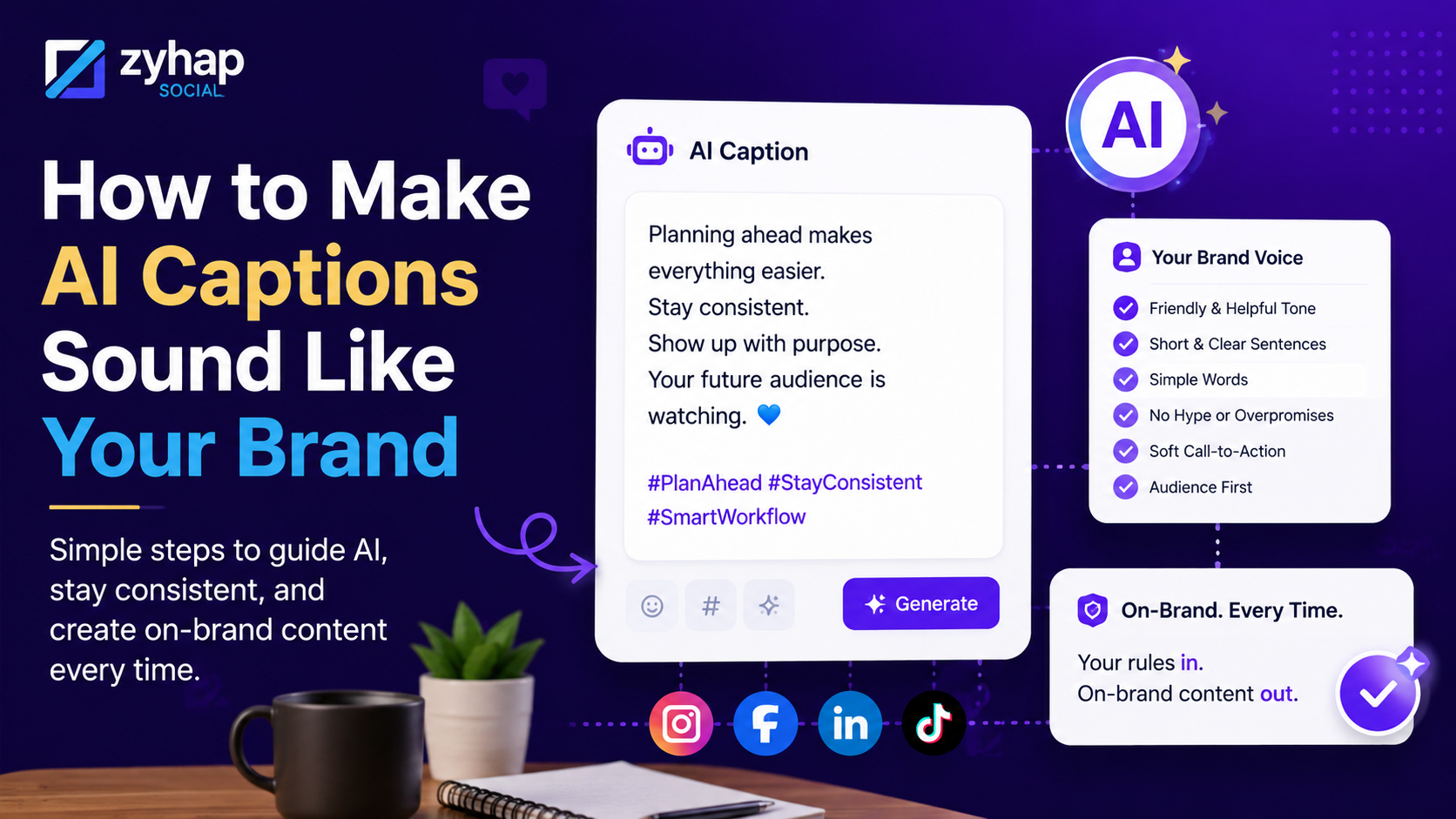
How to Make AI Captions Sound Like Your Brand
AI can help you create social media captions faster, but without the right brand voice, the results can sound generic. Here is how to guide AI so every caption matches your tone, style, and business message.